
 National unified service hotline: 4006-318-218
 5 x 10 hours service time
For many people, pets have become part of the family. When studying abroad or living in the country for a long time, on the one hand, I don't want to be separated from my dog and have no one to take care of. On the other hand, I don't know how to let my pets go with me. I don't know where to find answers to a bunch of questions, such as: do I need isolation? What documents need to be prepared? How to ensure the safety of pets? Which airlines are available? Information about pets going abroad in mainland China is quite limited. After all, it is not common to take pets abroad, and even fewer people know the complete relevant regulations and procedures. We went through careful arrangement and. Hope to help dog lovers in need.
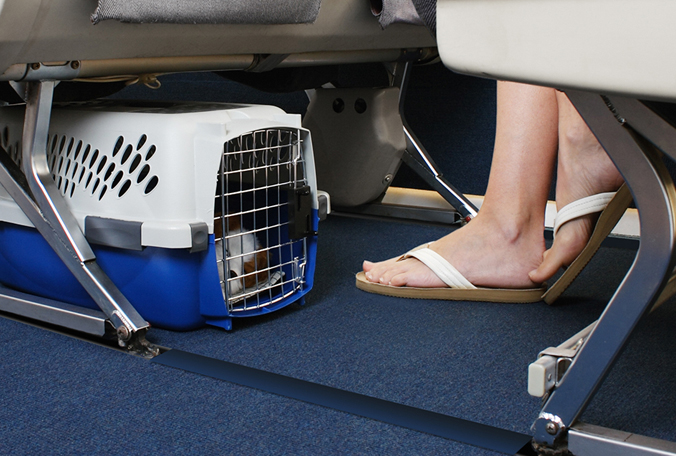
One, before the trip
Once the decision is made to take the family pet abroad, many preparations, including the understanding of relevant regulations, the acquisition of quarantine certificates, the preparation of flying equipment, and the pre-trip training, must be carried out. This will be explained one by one so that you can plan ahead. Please note that older dogs or puppies under 8 weeks of age are not suitable for flying. In addition, short-nosed breeds such as starlings and pekingese are not recommended for air pressure adjustment. Consult your airline for details.
1. Quarantine certificate
Whether the pet can pass through customs in the country of entry depends on the quarantine certificate. Quarantine regulations vary depending on the country you wish to visit. Take the United States as an example, because China is hydrophobic epidemic area, need to provide hydrophobic vaccine to inject certificate and the 'animal health certificate' that the government issues when entering a customs office, just remove need of quarantine observation. Can be brought back after entry.
For more information about quarantine regulations of other importing countries, please visit the following website: www.intlmover.com.cn.
Apply for health certificate first: bring your passport, pet, and rabies injection certificate to the pet hospital in Beijing or the pet hospital designated by the entry-exit quarantine bureau at your place of origin within 14 days before going abroad.
Note: time to issue health certificate and rabies vaccination certificate. (injection time should be more than 30 days, less than 1 year)
Deal with animal health certificate again: carry health certificate, passport, pet, rabies injection certificate to the departure and entry quarantine bureau.
Chipping: since the us does not require chipping for pets entering the country, your pets may not be implanted. However, as required by the quarantine bureau, all pets leaving the country in Shanghai must be chipped.
Rabies serum antibody test (FAVN&RNATT) : there is no serum test requirement for pets entering the United States. However, all countries in the European Union, Japan, South Africa, Saudi Arabia, united Arab emirates, Australia and New Zealand all have requirements for serum testing, and there are strict regulations on the time from serum testing to entry.
2. The day of going abroad
Pet identification and quarantine certificate must be checked at the airport in advance. In addition to confirming the identity of the pet, reconfirm that the document complies with the requirements of the importing country.
3. Travel gear
Most pets go abroad by air. Long flights, small Spaces, changes in pressure and temperature, and loud noises put a lot of pressure on them. Prepare proper travel equipment and mood - soothing items to keep your pet safe on the plane.
Transport cage
Unlike the usual kennels or wire cages, the cages are designed to carry pets safely. The material is usually impact resistant plastic products, with good anti - blocking ventilation design and convenient access. It can also be used as a dog house without traveling. Choose and buy, should consider the size of the pet, the pet in the cage can comfortably turn, stand, sit, lie down as the principle.
Labeling stickers
Please prepare several pieces of paper clearly labeled "Live Animal", indicating the characteristics of your pet and your contact information, and attach a photo of your pet. Put the "Live Animal" sign on the Animal's cage in obvious places. After the pet is handed over to the airline, only the air crew and ground staff have access to the pet. So the "Live Animal" sign can alert baggage handlers to handle it carefully and place it in a ventilated, safe place. In the event that a pet is accidentally released during transportation, a sticker with the pet's characteristics and photo can be used to help retrieve the lost dog, notify the owner or continue the journey.
Drinking water apparatus
Food is not suitable for flying, but water is needed. A water bottle that can be fixed to the door of the carrier cage is recommended. Not only can you keep your pet from getting wet from a spilled birdbath, you can also provide clean water along the way. To prevent your pet from drinking it all at once, freeze the water. The pet would then have to wait for the ice to dissolve before drinking.
Warm blankets
Unless a pet can enter the cabin (such as a guide dog or a miniature dog that can be placed under the seat), all pets must enter the baggage compartment. Usually there is no air pressure or temperature adjustment in the baggage compartment, only when the animals are on board. After the plane took off, the temperature in the baggage compartment was still low. Providing a simple warm blanket helps increase the comfort of the flight. It is not recommended to put a curtain on the cage outer cover, which can keep warm but cause poor ventilation.
Reassure items
Offering a pet's favorite toy or an item with a familiar smell can help calm anxious feelings. For example, putting a piece of clothes with the smell of the owner in the cage to the pet not only has the soothing effect, but also has the function of keeping the pet warm. In addition, the effects of sedatives at altitude may cause decreased cardiorespiratory fitness in pets, which is generally not recommended by veterinarians in the United States unless necessary.
4. Pre-trip training
As with all training methods, gradually introduce the cage to the pet. But PetTour's staff stress that the training should not be forced to avoid antagonism.
Familiar with transport cage
It is suggested that you put the air cage in and out of the pet, so that the pet will gradually get familiar with it without resistance. After gradually getting familiar with it, the pet can slowly try to enter the air cage for a nap, and finally achieve the purpose of making the pet fully adapt to it.
Create a haven
For a pet to really enjoy being in a cage, the transport cage must be its haven. Never use him to do things he doesn't like while he's in the cage.
Time growth training
Because pets spend a lot of time in cages, after they are handed over to the airline, plus the flight time, they can't come out until they arrive at their destination. Therefore, training pets to stay in cages for a long time is also an important preparation work. Allow your pet to adjust to bathroom breaks.
5. Buy airline tickets
Before you decide which airline to choose, be sure to ask about the rules and how to operate your pet. Some airlines don't accept carrying pets at all. Some airlines have body weight restrictions. After determining that the airline can carry pets, in addition to try to buy direct tickets, also want to further understand the following information.
Ask about baggage or cabin rules for pets. In order to consider the safety and comfort of the cabin and the interests of other passengers, most of the pets are in the baggage compartment. In addition to asking about the size of the cage, ask how the airline sets the temperature and adjusts the cabin pressure for the sake of pet safety. Try to schedule flights during cooler hours or at night, as the heat in the cabin can pose a safety risk to pets because of the sun before takeoff.
When purchasing tickets, please inform the airline that pets will travel with you and provide the size and weight of the cage. It usually takes airlines about a week to go through the process of notifying all travel agents so that they are prepared -- reserving space and adjusting cabin pressure.
Please confirm the itinerary of the air ticket with the information of pet companions indicated on it.
Choose a pet-friendly airline
I. Air China
1. Can carry pets.
2. Show the quarantine certificate.
3. Excess baggage is charged, per piece on the us/Canada route.
4. Pets will be arranged in baggage compartment with adjusted cabin pressure.
5. With a dog and cage, the heaviest weight should not exceed 50KG.
Ii. The American league
1. Can carry pets.
2. Show the quarantine certificate.
3. Excess baggage is charged, per piece on the us/Canada route.
4. The pet will be arranged in the baggage compartment, and the temperature and cabin pressure adjustment will be set accordingly.
The day of the flight
There are some things you can do or pay special attention to on the day of flying to increase the safety and comfort of your pet.
1, diet deployment
Try to eat only the most common foods on the day of your flight and don't overeat. Stop eating 4-6 hours before your flight. To reduce the need for pets to use the toilet in the cage. Healthy pets can tolerate occasional long periods without food (consult your veterinarian for the length of time, but generally up to a day), but be sure to have water. If your trip is long, pack a small amount of dry dog food in an airtight bag and tape it to the outside of the cage. In exceptional circumstances (such as long layover or weather delays), the dog food can be obtained and fed without opening the cage door.
Adjust your mood
Pets must be nervous to get on the plane, and proper exercise during the day will help calm the anxious mood. It also gives him time to go to the toilet, reducing his need to defecate in the cage. After boarding, pets can rest in peace.
3. Airport re-inspection
Apply for pet identification and quarantine certificate at airport exit inspection room in advance to avoid delay of flight. It also gives your pet time to calm down.
4. Check-in and boarding
I'd like to share some of my thoughts from check-in to boarding.
The counter for registration
Don't be afraid of being too verbose. Be sure to check with airport staff that the flight is ready for pets. The counter I met and the airport staff were careful to ask me to use a rope cage to make sure the doors didn't open when the plane was landing.
Tell the flight attendant
When waiting in the airport lobby, the flight attendant should remind the captain that pets are traveling with him. Pay more attention to the temperature setting and cabin pressure adjustment of the baggage compartment. The flight attendants are always willing to help. This is a very important technique!
Reduce the waiting time before take-off
Since you are not sure whether the cabin pressure and temperature adjustment has been started before take-off, please avoid giving your pet to the airport staff too early and avoid entering the cabin where it is hot in the sun -- especially in sultry weather. After handing the pet to the airport staff, please hurry to the boarding gate, preferably to see the pet is safely put into the baggage compartment.
3. Claim upon arrival
Pets get off the plane before people and are placed near the office next to the baggage carousel. Next, you just need to show the customs clearance documents and the quarantine certificate issued by the quarantine bureau to the customs personnel for verification, and then you can enter the customs.
Four, continue to fly
If you need to continue your flight after entry, repeat the above steps to alert the new crew to the presence of pets. Also make sure the baggage compartment has proper cabin pressure and temperature adjustment. For domestic flights in the United States, pay special attention to the carrier cage space and air temperature requirements. For humane and pet safety reasons, the airline reserves the right to request a suitable carrier cage (depending on the size of the pet, the cage can comfortably turn, stand, sit, or lie down) or refuse to carry the pet. Airlines also refuse to let pets on planes if the local temperature is too hot or too cold. Chinese airlines, which don't have such rules, still recommend taking these factors into consideration before flying. Or, if possible, continue the journey by car.
Finally, I hope all the pets can follow their owners safely and successfully arrive in a foreign country to start a new life.
The above is all the content of the public benefit activity "A guide to handling pets abroad" brought by Vanpac GroupAsia. Vanpac GroupAsia hopes to provide you with valuable information.
Vanpac GroupAsia is a one-stop relocation service provider. Is the best of the Asian countries handling group, in the far east has 15 locations, so far has more than 30 years history, Vanpac GroupAsia has developed into Asia's largest, one of the most powerful handling group, after years of development, wholeheartedly for the majority of immigrants, students, teachers, with kiss, foreign companies in China and abroad/people in the home to provide the most professional and international private transport solutions, services are: Domestic/international moving, office relocation, pet shipping, international shipping/air transportation, file storage/goods storage, furniture/personal goods/baggage cross-border shipping, moving to the world's door to door service, the business scope covers nearly 100 countries/regions.
Relocation
Relocation
checked
Relocation
Service


-
 Guangzhou International moved to Iran packaging caseGuangzhou International moved to Iran packaging case2019-04-02
 -
 Nanshan Group Shenzhen Chiwan Oriental Logistics Company Office Relocation Case SharingNanshan Group Shenzhen Chiwan Oriental Logistics Company Office Relocation Case Sharing2019-02-18
 -
 Guangzhou international move to Hong Kong packaging caseGuangzhou international move to Hong Kong packaging case2018-02-22
 -
 Guangzhou international move to South Korea packaging caseGuangzhou international move to South Korea packaging case2018-01-08